If you’ve recently heard the term “sewer lateral” from a home inspector, real estate agent, or municipal notice and had no idea what it meant, you’re not alone.
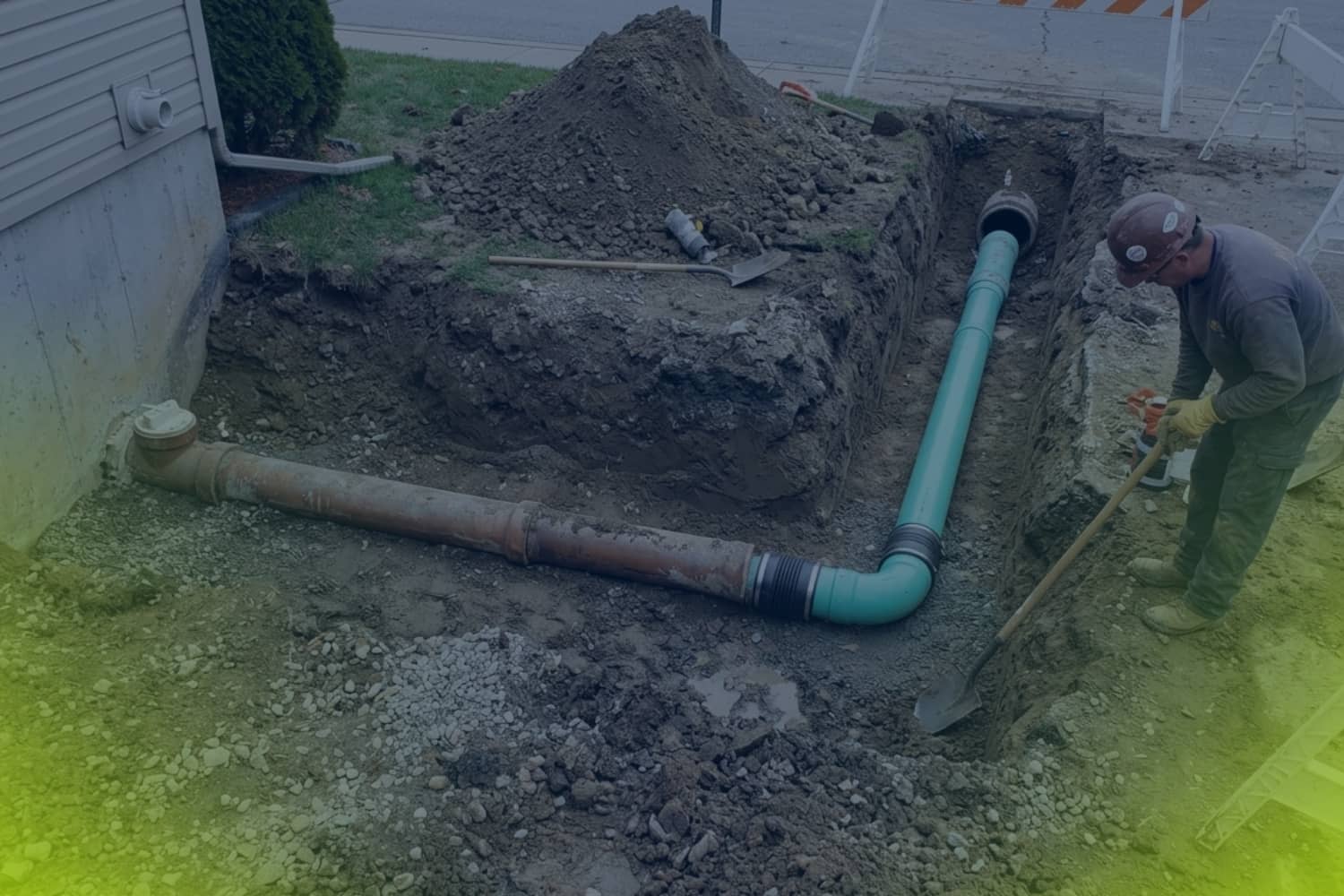
A sewer lateral is the private pipe that runs from your home to the public sewer main in the street, carrying all household wastewater from every sink, toilet, shower, and appliance underground and entirely on your property.
Most homeowners never think about it until something goes wrong, and by then it can be an expensive problem.
In Greater Philadelphia, where the majority of homes were built before 1950, understanding what a sewer lateral is and its current condition is one of the most important things you can do to protect your investment.
A standard home inspection does not include the sewer lateral, which means problems often go undetected until they escalate. If you’ve never had your lateral evaluated, a professional sewer lateral inspection is the only reliable way to know what’s actually happening underground.
Why Sewer Laterals Matter More in the Philadelphia Area
Philadelphia has some of the oldest housing stock in the country. More than half of the city’s homes were built before 1950, and many date back to the early 1900s. The surrounding suburbs, including parts of Delaware, Bucks, and Montgomery counties, share that same aging foundation.
Most Philadelphia-area homes have sewer laterals made of materials that are decades past their expected lifespan. Clay pipe, cast iron, and a problematic mid-century material called Orangeburg were the standards for most of the 20th century.
These pipes weren’t designed to last forever, and many are now cracked, corroded, or collapsing underground without anyone knowing.
There’s another layer of complexity unique to Philadelphia. Approximately 60% of the city, including Center City, South Philadelphia, West Philadelphia, and parts of North Philadelphia, operates on a combined sewer system, where stormwater and wastewater share the same pipes.
During heavy rainstorms, this system can become overwhelmed, and if your sewer lateral is already compromised, the risk of a basement backup increases significantly.
Row homes make up the majority of Philadelphia’s residential housing and present their own sewer challenges. Shared property lines and tightly spaced homes can mean laterals run at angles or in configurations that differ from a standard single-family layout.
Understanding how your specific home connects to the city’s system is worth knowing before a problem surfaces.
The Anatomy of a Sewer Lateral
Knowing the basic structure of a sewer lateral helps you understand what you own and what you’re responsible for.
A sewer lateral has two main sections. The upper lateral runs from your home’s foundation to the property line or curb. The lower lateral continues from the property line to the connection point at the public sewer main.
In most municipalities, homeowners own the entire lateral from foundation to main. Inside or near the foundation, you’ll typically find a cleanout, a capped pipe access point that lets inspectors insert a camera or snake into the lateral without going through a toilet or drain.
Some older Philadelphia homes also have a curb trap or building trap, a U-shaped fitting that blocks sewer gases from entering the home, and these are worth noting during any inspection, as they can affect how the camera work gets done.
Pipe Materials and How Long They Last
The material your sewer lateral is made of tells you a lot about its current risk level. Here’s a breakdown of the most common materials found in Greater Philadelphia homes:
| Material | Typical Lifespan | Era Installed | Risk Level for Philly Homes |
|---|---|---|---|
| Vitrified Clay | 50–60 years | Pre-1970 | High: joints are vulnerable to root intrusion and shifting |
| Cast Iron | 75–100 years | 1900s–1970s | Moderate to High: internal corrosion is the primary concern |
| Orangeburg | 30–50 years | 1940s–1970s | Critical: made of wood pulp and coal tar; all should be evaluated immediately |
| PVC | 100+ years | 1970s–present | Low: current standard; corrosion-resistant with fewer joint failures |
If your home was built before 1970, there’s a strong chance your lateral is clay or cast iron. If someone built or renovated it between the 1940s and 1970s, Orangeburg pipe is a real possibility.
Manufacturers made Orangeburg from compressed wood pulp and coal tar pitch, and widely used it as a cheap alternative during and after World War II. It deteriorates from the inside out, eventually losing its shape and collapsing.
If a sewer camera inspection turns up Orangeburg, replacement is typically the only responsible option. Knowing your pipe material before buying a home or before a problem develops gives you a major advantage in planning and negotiating.
Warning Signs Your Sewer Lateral May Have a Problem
Because sewer laterals run underground and out of sight, problems often develop slowly before making themselves obvious. Here are the warning signs homeowners should know.
Multiple drains running slowly at the same time is one of the clearest indicators of a main line issue rather than an individual clog. If your kitchen sink, bathroom sink, and bathtub are all draining slowly, the problem likely sits further down the line.
Sewage backups through floor drains, toilets, or bathtubs, especially in the lowest level of your home, often point to a blockage or collapse in the main lateral.
Gurgling sounds from drains after flushing a toilet or running water signal that air is trapped somewhere it shouldn’t be, often because of a partial blockage in the lateral.
Foul odors coming from drains indoors or from soft, damp ground in your yard can mean sewage is escaping from a cracked or broken pipe underground.
Unexplained wet spots, soft patches, or sinkholes in your yard directly above the lateral’s path are serious warning signs that deserve immediate attention.
Unusually lush or green grass running in a line across your yard, even during dry periods, can mean sewage is leaking underground and fertilizing the soil above.

If you’re noticing any of these signs, a sewer lateral inspection is the fastest way to get a clear picture of what’s happening underground. It’s also worth noting that a standard home inspection does not cover the sewer lateral.
The lateral needs a separate, specialized camera inspection to evaluate its condition properly.
How a Sewer Lateral Inspection Works
A sewer lateral inspection, also called a sewer scope inspection or sewer camera inspection, is a straightforward process that takes between 30 minutes and two hours, depending on the length and condition of the line.
Here’s what to expect:
- Access point location. The inspector locates the best entry point, usually an exterior cleanout, building trap, or, in some cases, a toilet flange, to access the lateral.
- Camera insertion. A technician feeds a high-resolution, waterproof camera on a flexible rod through the pipe. LED lighting illuminates the interior as the camera advances.
- Live video monitoring. The inspector watches a live feed and notes the pipe condition, material, any visible defects, and the distance from the access point using a footage counter.
- Documentation. The inspector records the full inspection on video and marks the location of any problems above ground so a plumber can reference them for repair estimates.
After the inspection, you’ll receive a copy of the video footage, a written report with findings, and a clear summary of what the inspector discovered.
The camera can pick up cracks, fractures, and breaks in the pipe; tree root intrusion; bellies and sags where water pools; offset or misaligned joints; internal corrosion; and pipe material identification.
One important note: a sewer lateral inspection from an independent home inspector differs from one a plumbing company offers. An independent inspector has no financial interest in recommending repairs.
That objectivity matters when you’re making a major financial decision about a home.
When Should You Get a Sewer Lateral Inspection?
There are several situations when a sewer lateral inspection is the right move.
Before buying a home is the most important one is A sewer lateral inspection, which is not part of a standard home inspection, but it should absolutely be part of your due diligence, especially for any Philadelphia-area home built before 1970.
Ordering the inspection during your contingency period allows you to negotiate repairs, request seller credits, or walk away if the findings are serious.
When your municipality requires it. An increasing number of townships across Delaware, Bucks, and Montgomery counties now mandate sewer lateral inspections at the point of sale. If your transaction falls under one of these ordinances, the inspection is required, not optional.
After repeated drain problems. If a plumber has snaked your drains multiple times in recent years and the problem keeps coming back, a camera inspection will reveal whether a structural issue in the lateral is driving the recurring clogs.
After discovering large trees near your lateral. Tree roots are one of the leading causes of sewer lateral damage. Philadelphia’s urban tree canopy includes many species with aggressive root systems, including silver maple, sycamore, and London planetree, that push into clay and cast iron pipes at joints and cracks.
If mature trees sit within 20 to 30 feet of your lateral’s path, a camera inspection is a smart precaution.
As part of routine maintenance. For homes with older pipes, running the camera every one to two years is smart. It will help you catch developing problems before they turn into emergencies.
Which Local Municipalities Require a Sewer Lateral Inspection?
One of the most practical things you can know going into a real estate transaction in the Greater Philadelphia area is whether your municipality requires a point-of-sale sewer lateral inspection.
This requirement varies significantly by township and borough.
| Municipality | County | Requirement Summary |
|---|---|---|
| Upper Darby Township | Delaware | Camera inspection required before property transfer; valid 90 days; interior inspection also required as of January 2025 |
| Nether Providence Township | Delaware | Video inspection required; inspector must be NASSCO or PA PHCC certified |
| Sharon Hill Borough | Delaware | Video inspection with a written report required |
| Middletown Township | Delaware | I&I Coordinator reviews video inspections for homes being sold |
| Warminster Township | Bucks | Video inspection with a written report required |
| Lower Makefield Township | Bucks | Point-of-sale requirement enacted in March 2025 |
| Falls Township | Bucks | Inspection required at the point of sale |
| Jenkintown Borough | Montgomery | Ordinance in place requiring inspection |
| Cheltenham Township | Montgomery | Developed in partnership with Suburban Realtors Alliance |
| Ambler Borough | Montgomery | Inspection required at the point of sale |
This list continues to grow as municipalities work to address aging infrastructure and inflow and infiltration issues in their sewer systems.
Under Pennsylvania Act 133, municipalities that require point-of-sale inspections must give homeowners 12 months to correct any violations the process turns up.
This gives sellers some breathing room when findings are unexpected, but buyers should understand that a required inspection doesn’t always mean sellers will fix defects before closing.
If you’re unsure whether your municipality has a requirement in place, your real estate agent or a local home inspector can point you in the right direction.
Who Is Responsible for the Sewer Lateral?
This is one of the most common points of confusion for Philadelphia homeowners, and the answer is straightforward: you are responsible for the entire sewer lateral, from your home’s foundation all the way to the connection at the public sewer main in the street.
The Philadelphia Water Department holds homeowners responsible for the lateral pipe, the slant or tap connection at the main, the house main drain, the curb trap, and the vent pipe or fresh air inlet. PWD only maintains the public sewer main itself.
If repairs require digging under a sidewalk or street, the homeowner covers that cost too.

When PWD inspectors find a defective lateral, they issue a Notice of Defect. Homeowners must address the problem within the timeframe the notice specifies. All sewer lateral repair work requires a Sewer Connection Permit from PWD, and a licensed master plumber must carry out the work.
If you receive a Notice of Defect, financial help is available. PWD’s Homeowner’s Emergency Loan Program (HELP) offers zero-interest repair loans with a five-year repayment term for eligible homeowners.
The Philadelphia Energy Authority also runs a Water and Sewer Line Protection Program through American Water Resources, which covers repair costs for $14.99 per month with no deductibles or dollar limits on claims.
What Happens If the Inspection Finds a Problem?
When a sewer lateral inspection turns up an issue, the right repair approach depends on the extent of the damage, the pipe material, and how accessible the line is.
Drain cleaning or hydro jetting can often resolve minor issues like grease buildup or small root intrusions. These are relatively straightforward fixes that don’t require any digging.
More serious damage, such as cracks, collapsed sections, or widespread root intrusion, typically calls for either a spot repair on the affected section or a full lateral replacement. Trenchless methods, including pipe bursting and cured-in-place pipe lining, cause less disruption to landscaping and hardscaping but don’t work for pipes that have already fully collapsed. Traditional excavation remains the standard approach for severely damaged laterals.
If a pre-purchase inspection turns up significant problems, the findings give buyers a concrete basis for requesting a price reduction, a repair credit, or seller-funded repairs before closing.
Related Questions
Does a standard home inspection include a sewer lateral inspection?
No. A standard home inspection covers visible and accessible components of a home, including the roof, structure, electrical, plumbing fixtures, and HVAC. If you’re buying a home, especially one built before 1970, order a sewer lateral inspection as a separate add-on service during your inspection contingency period.
Can tree roots really damage a sewer lateral?
Yes, and it’s one of the most common causes of sewer lateral failure. Tree roots naturally seek out moisture and push into clay and cast-iron pipes through joints and small cracks. Once inside, they grow and expand, eventually blocking the flow or breaking the pipe entirely.
What is Orangeburg pipe, and should you worry about it?
Manufacturers produced Orangeburg pipe as a low-cost alternative to cast iron from the 1940s through the early 1970s. They made it from compressed wood pulp and coal tar pitch with a lifespan of no more than 50 years. If a camera inspection turns up Orangeburg, replacement is almost always the right call.
How often should I have my sewer lateral inspected?
For homes with older clay or cast-iron pipes, running the camera every 1 to 2 years is a reasonable schedule. For homes with newer PVC laterals and no known issues, every two to three years is generally sufficient. If you recently bought a home that was never scoped, scheduling an inspection right away is the best way to establish a baseline and avoid surprises.
Ready to Schedule a Sewer Lateral Inspection in Greater Philadelphia?
Most sewer lateral problems don’t announce themselves until there’s already significant damage underground. A camera inspection is the only reliable way to see what’s actually happening below the surface. In the Philadelphia area, where aging pipes and older homes are the norm, that knowledge is genuinely valuable.
At L&L Home Inspections, we offer professional sewer lateral inspections throughout Greater Philadelphia, including Bucks, Delaware, Montgomery, and Berks counties.
