The quickest way to know if you have a septic tank is to check your water or sewer bill. If you pay no sewer charge, your home most likely sends its wastewater to a septic system on your own property.
You can confirm it with property records, a walk around the yard, or a septic inspection.
At L&L Home Inspections, we hear this question from new homeowners and buyers across Greater Philadelphia every month.
The answer matters, because a septic system needs pumping and care that a public sewer line never does.
This guide covers seven ways to tell, clues inside your house, common mix-ups, and when to call a pro.
Septic Tank vs. Public Sewer: What’s the Difference?
A septic system treats your home’s wastewater on your own land. A public sewer carries it away through underground pipes to a treatment plant run by your town or a local sewer authority.
A septic system has two main parts:
- The septic tank. A buried tank, usually concrete or plastic, holds the wastewater long enough for solids to settle. Heavy solids sink and form sludge. Grease and oils float and form a scum layer.
- The drain field. The liquid in the middle, called effluent, flows out of the tank into a drain field (also called a leach field). The soil there filters and cleans it. Here’s a closer look at how a leach field works.
A home on public sewer has a pipe called a sewer lateral that runs from the house to the sewer main, usually under the street.
You can learn more in our guide to sewer laterals for PA homeowners.
Septic is more common than many people think. About 1 in 5 U.S. homes uses a septic system, according to the EPA.
Penn State Extension reports that about 25% of Pennsylvania housing units use on-lot septic systems.
| Septic System | Public Sewer | |
|---|---|---|
| Who owns it | You, the homeowner | Town or sewer authority (you own the lateral) |
| Monthly sewer bill | None | Yes, often on the water bill or a separate bill |
| Routine care | Pumping every few years, protecting the drain field | Little |
| Most costly repair | Drain field replacement | Sewer lateral repair or replacement |
| Who approves permits | County health department or township Sewage Enforcement Officer | Local sewer authority |
7 Ways to Tell If Your Home Has a Septic Tank
Start with your paperwork, then walk the property. Most homeowners can get a clear answer from the first three steps. The last four help when your records are missing or don’t agree.
1. Check Your Water or Sewer Bill
Look for a sewer, wastewater, or sanitary charge. If the charge is $0.00 or missing, your home is likely on septic. The EPA’s septic system FAQ lists this as one of the first things to check.
Keep in mind that many Pennsylvania towns bill sewer through a separate municipal authority, not the water company.
If your water bill shows no sewer line, look for a second bill before you decide. If your home has a private well, you may not get a water bill at all.
2. Look at Your Property Records and Closing Documents
Your home’s paperwork often answers the question in writing. Look through:
- The deed and building permits. These may mention an on-lot sewage system or a septic permit.
- The seller’s disclosure. Pennsylvania’s seller disclosure form asks about the home’s sewage system.
- The real estate listing. Listings often say “public sewer” or “on-lot septic.”
- Your home inspection report. Many inspectors note the sewage type.
- Old septic pumping receipts. If a past owner had the tank pumped, you have your answer.
3. Call Your County Health Department or Township
Your local government keeps records of septic permits. In Montgomery County, the Office of Public Health issues on-lot sewage permits through local Sewage Enforcement Officers.
You can call them at 610-278-3000. In Bucks County, the Department of Health keeps septic and well records you can request. Other counties and townships have similar offices.
Your township or sewer authority can also tell you if your address is connected to the sewer. Ask them directly.
A sewer map shows where the main lines run, but a main on your street doesn’t always mean your house is hooked up to it.
4. Check Whether You Have a Private Well
Homes with a private well are often on septic, especially in rural areas. If you see a well cap in the yard or a pressure tank in the basement, there’s a good chance your wastewater stays on the property too.
Our post on well water pressure tanks explains what that tank does.
This isn’t a hard rule, though. Plenty of homes have public water and a septic tank.
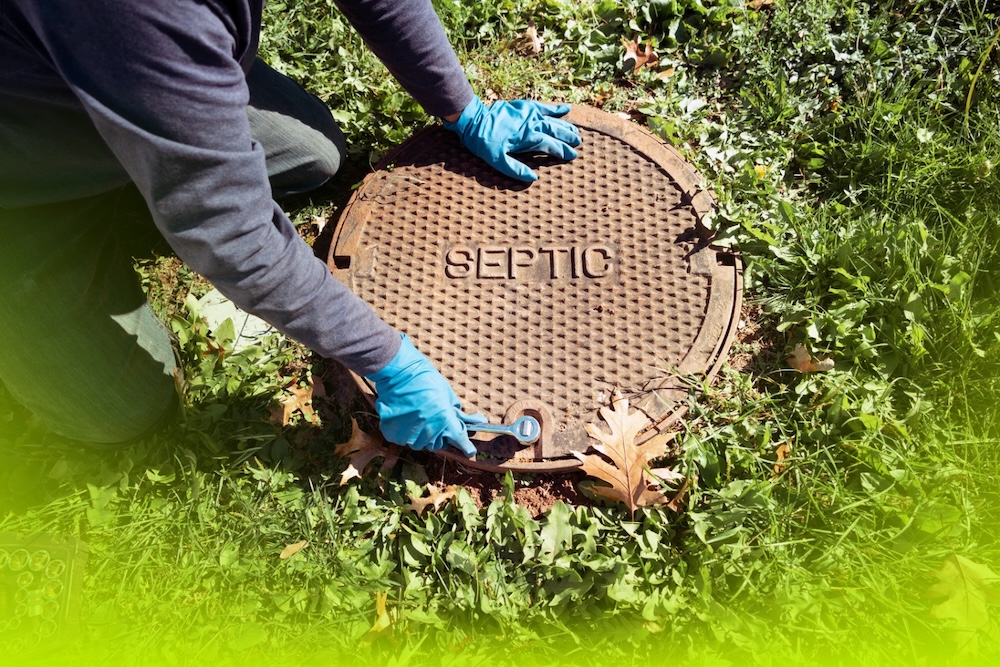
5. Look for a Septic Tank Lid or Riser
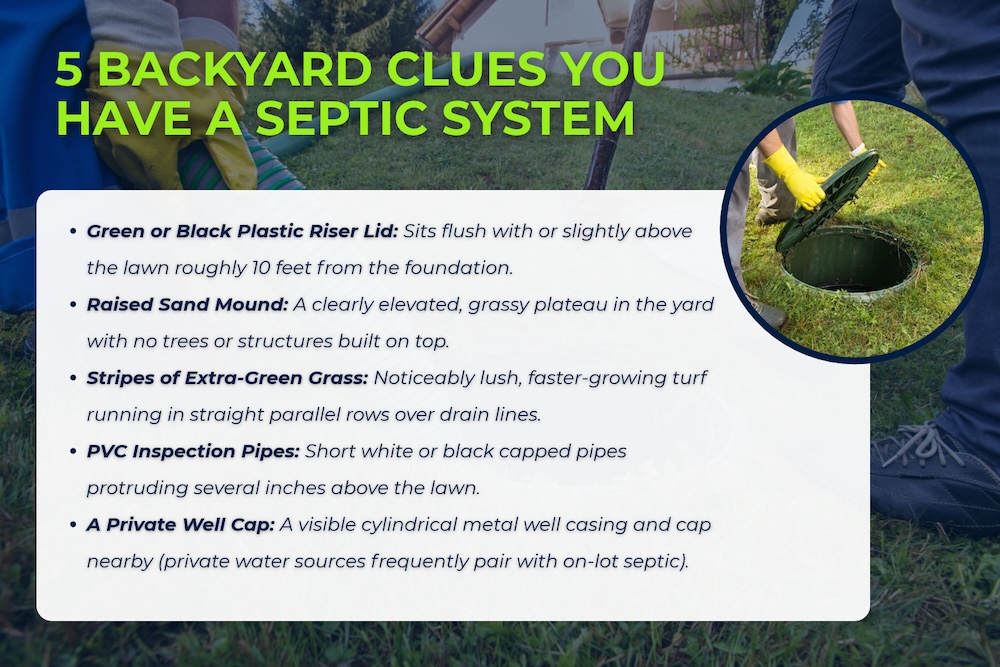
Walk the side of the house where your main drain pipe leaves the foundation. The EPA notes that a septic tank is usually about 10 feet from the house. Look for:
- A round or square green or black plastic lid, called a riser
- A concrete lid at or just below ground level
- A small capped pipe sticking out of the grass
Many tanks are fully buried, so you may not see a lid at all. Don’t dig or pry open anything you find. The gases inside a septic tank are dangerous, and Penn State Extension warns that they can kill.
6. Look for Signs of a Drain Field
Drain fields leave clues in the yard. Watch for:
- A large, flat, open area with no trees or buildings on it
- A raised mound of grass, common with sand mound systems in Pennsylvania
- Stripes of greener or faster-growing grass in straight rows
- Short white or black inspection pipes sticking out of the lawn
7. Ask Your Neighbors
If the homes on your street are on septic, yours probably is too. Neighbors who have lived there a while often know the history, including whether the street was ever connected to public sewer.
Clues Inside the House That Point to Septic
Your basement or crawlspace can tell you a lot. Home inspectors check these clues because they help confirm what the records say.
- Follow the main drain line. Find the largest drain pipe, usually 3 or 4 inches wide, and see where it leaves the foundation. A pipe that heads toward the street points to sewer. One that heads toward the backyard or side yard can point to septic.
- Find the cleanout. A capped cleanout near the wall where the main line exits shows you the direction of flow.
- Look for an alarm panel. Some septic systems, such as sand mounds, use a pump to move effluent to the drain field. These often have a high-water alarm mounted on a wall or post.
- Notice how your drains behave. Slow drains and gurgling sounds can happen on either system, but they are a common early sign of septic trouble. Here’s why a shower gurgles when the toilet is flushed.
A sewage ejector pump in the basement doesn’t answer the question by itself. It lifts waste up to the main line, which can lead to either septic or sewer.
Common Mix-Ups That Lead to the Wrong Answer
A few things trip up homeowners and even some buyers’ agents.
- Public water doesn’t mean public sewer. Your water and your wastewater can come from two different systems.
- An old tank may still be in the yard. Some homes switched to public sewer years ago. The old tank should have been pumped and filled or removed. If it wasn’t, it can collapse later.
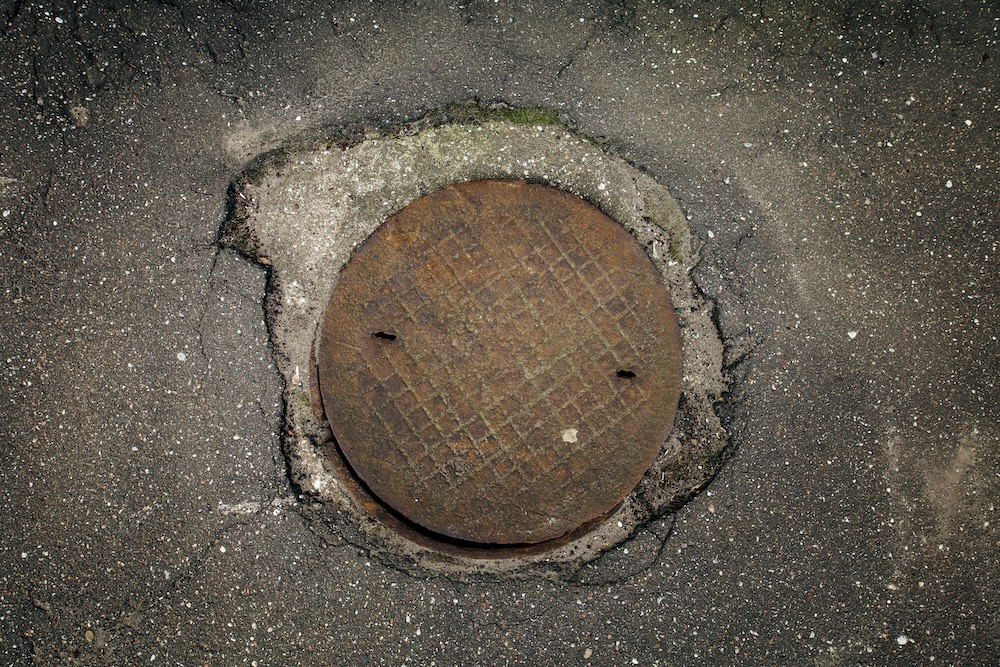
- Not every lid is a septic lid. Well caps, irrigation boxes, and sewer cleanouts are often mistaken for septic tank lids.
- A cesspool is not a septic system. Cesspools are older pits without a separate drain field. They are rare in newer homes but still show up in older properties.
What to Do Once You Know You Have Septic
Once you confirm you have septic, learn the basics of your system so you can take care of it.
- Find the tank. A septic pumping company can locate it and add a riser so it’s easier to reach next time.
- Learn the tank size and age. Size affects how often it needs pumping. This guide on choosing the right septic tank size explains how tanks are sized.
- Track pumping. The EPA says most household septic tanks should be pumped every three to five years.
- Protect the drain field. Keep cars, sheds, pools, and trees off of it.
- Watch for warning signs. Learn the signs of a failing septic system so you can act early.
Problems that start small can get expensive. Drain field repairs can run $10,000 to $25,000 or more.
Buying a Home? Why Septic Status Matters
If you’re buying a home, find out whether it has septic before you sign. Pennsylvania doesn’t require a septic inspection when a home sells, so it’s up to you to ask for one. Check with the township too, since some local rules differ.
A standard home inspection looks at the plumbing inside the house. It does not fully test the tank or the drain field. A septic inspection does.
According to Penn State Extension, buyers should add a septic inspection contingency to their offer and use an inspector trained to Pennsylvania Septage Management Association (PSMA) standards.
At L&L Home Inspections, all of our septic inspectors are PSMA certified. We check the tank, baffles, inlet and outlet pipes, distribution box, and drain field.
You can book a septic inspection along with your home inspection so you get the full picture in one visit.
Related Questions to Explore
Do all houses have septic tanks?
No. Most homes in cities and suburbs connect to public sewer. Septic tanks are most common in rural areas and in neighborhoods built before sewer lines reached them. About 1 in 5 U.S. homes is on septic.
How do I know if my house is on sewer or septic?
Check your water or sewer bill first. A $0 sewer charge points to septic. Then confirm with your property records or your township, since they can tell you whether your address connects to the public sewer.
How do you know if your septic tank is full?
Slow drains, gurgling pipes, sewage odors, and soggy or extra-green grass over the drain field are common signs. Our post on septic system warning signs covers what to watch for.
How far is a septic tank from the house?
Most septic tanks sit about 10 feet from the house, along the path of the main drain line. Some are farther, depending on the lot and local rules when the home was built.
Can a house have both septic and sewer?
A house uses one system at a time, but some homes still have an old septic tank in the yard after switching to public sewer. That tank should be properly abandoned so it doesn’t collapse.
Is a septic inspection part of a home inspection?
Usually not. A home inspection checks the plumbing inside the house, while a septic inspection checks the tank and drain field. Most buyers book both. L&L Home Inspections offers both in the same visit.
When to Call a Professional
Call a professional when your records and the clues in the yard don’t agree, or when you can’t find the tank at all.
A pro can locate the system, confirm whether it’s septic or sewer, and tell you what shape it’s in.
You should also call a pro if:
- You are buying a home, and the listing doesn’t clearly say “public sewer”
- You see soggy ground, odors, or sewage backups
- You plan to build an addition, pool, or shed and need to know where the drain field is
- You have never had the tank pumped or inspected
Never open a septic tank lid or try to look inside on your own. The gases can be deadly, and old lids can give way.
L&L Home Inspections serves Montgomery, Bucks, Berks, and Delaware Counties and Greater Philadelphia.
Our PSMA-certified inspectors can confirm what you have and give you a clear, easy-to-read report.
Ready to Schedule a Septic Inspection in Greater Philadelphia?
Knowing whether you have a septic tank helps you avoid surprise repairs and plan the right care.
- Your water or sewer bill and property records are the fastest way to check.
- Yard and basement clues help confirm what the records say.
- A septic inspection is the only way to know what shape your system is in.
Not sure what’s under your yard? Schedule your septic inspection with L&L Home Inspections today, or call us.
