Crawl space moisture problems don’t usually announce themselves. They build quietly beneath your home all winter, and spring is almost always when homeowners finally notice something is wrong.
If you own a home in Greater Philadelphia, this is worth paying close attention to. The region’s climate, older housing stock, and soil conditions make crawl space moisture problems more common here than in many other parts of the country.
Understanding what’s happening below your home and when to act can save you from a much bigger problem down the road.
Why Crawl Space Moisture Problems Get Worse Every Spring
Spring puts more pressure on your crawl space than any other season.

Snowmelt and Spring Rain Saturate the Ground
Philadelphia typically sees close to four inches of precipitation in March alone. When that combines with snowmelt, the ground around your foundation becomes saturated quickly.
For homes without adequate drainage or moisture protection, a significant amount of that water ends up beneath the home.
Freeze-Thaw Cycles Leave the Door Open
Winter freeze-thaw cycles repeatedly expand and contract the soil and foundation materials around your home. Small cracks and gaps that were barely noticeable in the fall can widen considerably over a cold season. By the time spring rain arrives, those openings are ready to let moisture in.
Older Homes Face a Greater Challenge
Most homes built before the 1970s in the Greater Philadelphia area were constructed before vapor barriers and sealed crawl space standards existed.
Many still have bare dirt floors below the home. Spring after spring, moisture cycles through these spaces with nothing in place to stop it.
What’s Actually Causing the Moisture in Your Crawl Space
In most homes, crawl space moisture problems come from one or more of these sources.
Poor Drainage Around the Foundation
Clogged gutters, short downspouts, and ground that slopes toward the foundation all allow water to pool where you don’t want it. Over time, that water finds its way in through the foundation walls or floor.
A Missing or Damaged Vapor Barrier
A vapor barrier is a thick plastic liner installed over the crawl space floor. Without one, or with one that is torn or deteriorated, ground moisture rises continuously into the space below your home.
Open or Damaged Crawl Space Vents
Vented crawl spaces were once considered best practice. Research has since shown the opposite. When warm, humid outdoor air enters a cool crawl space, it condenses on surfaces and raises humidity levels quickly. Open vents tend to make moisture problems worse.
Groundwater Seepage and Plumbing Leaks
Parts of Greater Philadelphia sit on soil with naturally high water tables, particularly in lower Bucks County and areas of South Philadelphia. Groundwater can push up through a dirt crawl space floor after heavy rain or rapid snowmelt. Slow plumbing leaks running beneath the home can add to the problem without any visible sign above.
If there’s any concern about underground plumbing contributing to the problem, a sewer lateral inspection can rule out a damaged or leaking line beneath the property.
Warning Signs Your Crawl Space Has a Moisture Problem
Many homeowners don’t connect what they’re noticing inside the home to what’s happening in the crawl space below. These are the most common signs to watch for.
| Warning Sign | What It May Indicate |
|---|---|
| Musty odor throughout the home | Moisture and potential mold rising from below |
| Sagging or falling insulation | Insulation saturated and losing effectiveness |
| Buckling or uneven hardwood floors | Subfloor absorbing moisture from beneath |
| High indoor humidity or window condensation | Crawl space air pushing into living spaces |
| Worsening allergy or respiratory symptoms | Mold spores are circulating through the home |
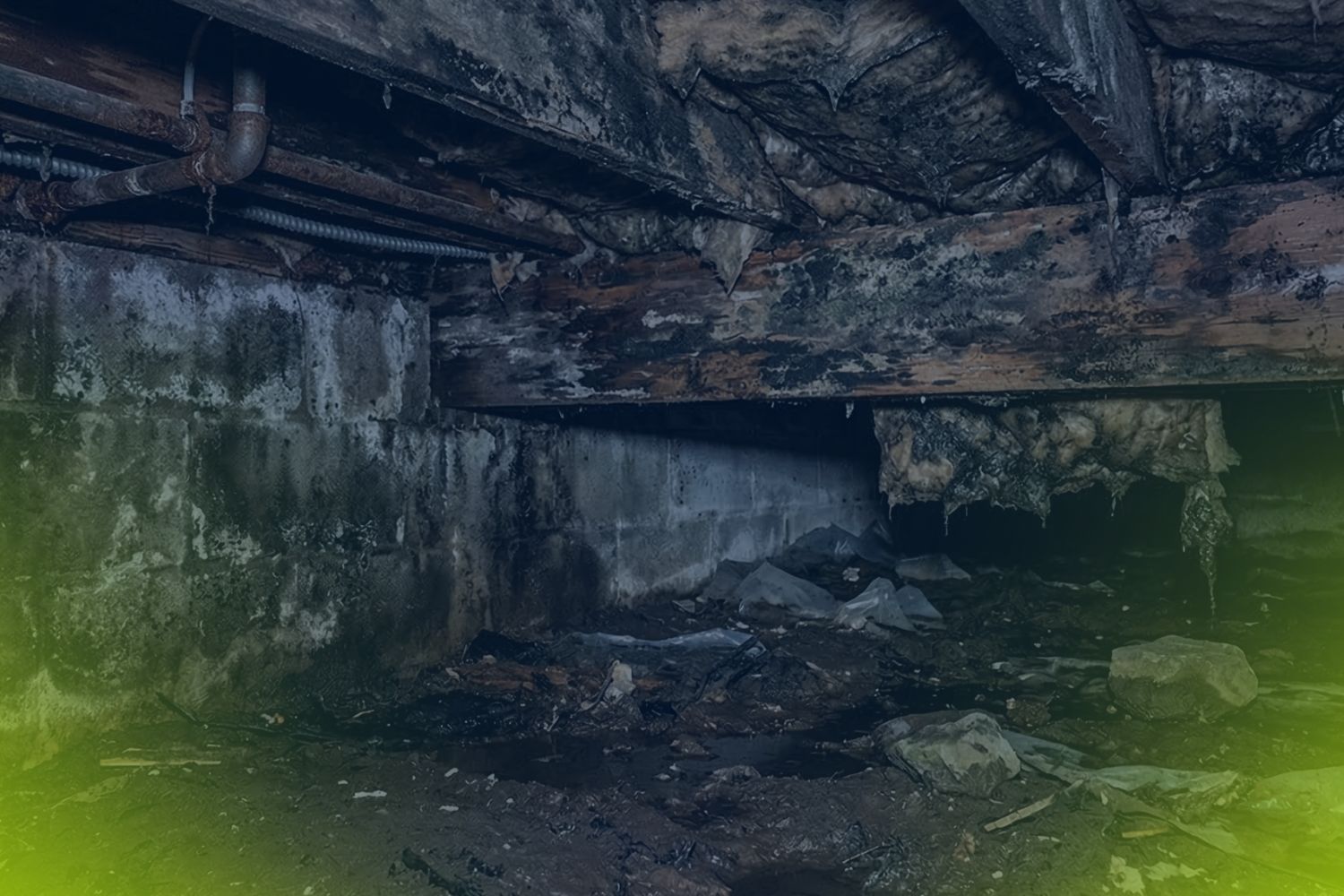
| Visible mold or dark staining on wood | Active mold growth on joists or subfloor framing |
These signs rarely appear on their own. They tend to cluster, and they tend to get more noticeable as spring progresses.
How Crawl Space Moisture Leads to Mold Growth
Moisture and mold are closely connected, and a crawl space gives mold exactly what it needs to take hold.
What Mold Needs to Grow
Mold requires a surface to grow on, warmth, and moisture. A crawl space has all three in abundance, especially in spring when temperatures climb, and humidity rises quickly after a long, wet winter.
The Stack Effect Brings It Into Your Home
As warm air rises through your home, it pulls air upward from below through gaps around plumbing, wiring, and ductwork. That air comes from the crawl space.
If mold is present below, that air carries spores with it into the rooms where your family lives and breathes.

This is why homeowners with crawl space moisture problems often notice musty smells throughout the entire house, not just near the access point.
When to Get Your Air Tested
If you are concerned about mold in your home, a professional air quality and mold testing service can identify whether spores are present and where they are coming from. Knowing for certain is far better than guessing.
What You Can Check Yourself and When to Call a Professional
You don’t have to crawl under your home to get a general sense of whether there’s a problem.
A Basic Homeowner Check
A flashlight and a few minutes at the crawl space access point can tell you quite a bit. Look for standing water or damp soil near the opening. Check whether insulation is sagging or has fallen away. Look for any dark patches or fuzzy growth on wood surfaces. Note whether there’s a strong musty smell when you open the access door.
These are things any homeowner can do safely.
When a Professional Inspection Is Needed
There is a clear line between what a quick look can tell you and what a trained inspector can find. A professional home inspection that includes the crawl space assesses moisture levels in the wood framing, checks for structural damage, evaluates the vapor barrier, looks for pest activity, and identifies how water is moving around and under the foundation.
Inspectors also have the tools to find moisture that isn’t visible to the naked eye.
Don’t Overlook Radon
In Pennsylvania, the same cracks and gaps that let moisture into the crawl space can also allow radon gas to enter the home. If your crawl space hasn’t been evaluated recently, radon testing alongside a moisture assessment is worth considering.
If you are seeing active mold, soft floors, persistent water, or unexplained health symptoms, don’t wait. A professional evaluation early almost always costs less than dealing with the damage later.
Related Questions
What humidity level is too high in a crawl space?
If you’re seeing crawl space humidity above 60%, it is time to have a professional inspect the area for moisture intrusion and mold risks through our crawl space inspection services
Does homeowners’ insurance cover crawl space moisture damage?
Standard homeowners’ insurance generally does not cover moisture damage that develops gradually. For a better understanding of what our inspections include and how we help protect buyers and sellers, visit our about page.
How do I know if my crawl space needs a vapor barrier?
If your crawl space has a bare dirt floor, it almost certainly benefits from one. Signs include high indoor humidity, musty odors, and damp soil at the access point. A home inspection can confirm what’s needed.
Conclusion
Crawl space moisture problems don’t fix themselves. Left unaddressed, they tend to get worse with each passing season.
If you’ve noticed any of the warning signs in this article, or if your home is older and the crawl space has never been properly evaluated, now is a good time to act.
L&L Home Inspections LLC serves homeowners throughout Greater Philadelphia, including Bucks, Montgomery, Chester, and Delaware counties. Schedule an inspection or request a quote today.
